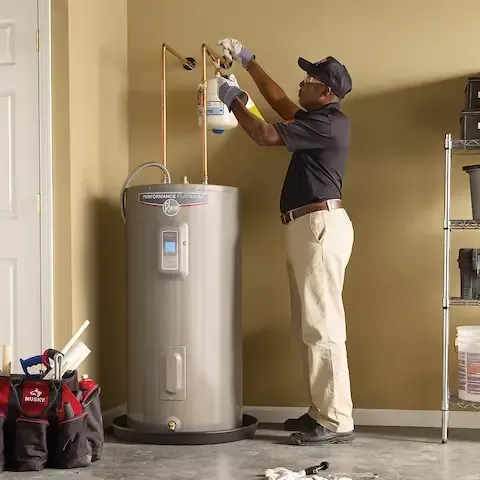
Worthington Water Heater Installation Sizing and Costs
Choosing the right water heater for your Worthington home involves more than picking the cheapest option at the hardware store. You need to match capacity to your household's hot water demands while considering installation costs, energy efficiency, and your home's existing infrastructure. The wrong size leaves you with cold showers or unnecessarily high energy bills, while improper installation can create safety hazards and void warranties.
Most Worthington households use between 40 and 80 gallons of hot water daily, depending on family size and usage patterns. A properly sized unit should meet peak demand periods without running out, typically during morning routines when multiple people shower, run dishwashers, and prepare for work or school.
Determining Proper Water Heater Size for Your Home
The most reliable sizing method uses your home's bedroom count as a baseline, then adjusts for specific usage patterns. A two-bedroom home typically needs a 40-gallon unit, while three-bedroom homes work well with 50 gallons, and four-plus bedroom homes often require 60-80 gallon capacity.
However, bedroom count alone doesn't tell the complete story. Consider your family's hot water usage patterns throughout the day. Households with teenagers who take long showers, frequent laundry cycles, or large soaking tubs need additional capacity beyond the bedroom-based recommendation.
Peak hour demand calculation provides the most accurate sizing method. Track your household's maximum hot water use during the busiest one-hour period, typically between 6-8 AM on weekday mornings. A standard shower uses 10 gallons in eight minutes, dishwashers consume 6-16 gallons per cycle, and washing machines use 7-25 gallons depending on load size and temperature settings.
Tank-style units should provide enough hot water to meet 70-80% of your peak hour demand, as they continuously reheat water throughout the day. Tankless systems must match 100% of peak demand since they heat water on-demand without storage capacity.
Gas vs Electric vs Tankless Installation Considerations
Gas water heaters dominate Worthington installations due to Columbia Gas infrastructure throughout the area and lower operating costs compared to electric units. Gas units heat water twice as fast as electric models, with recovery rates of 20-25 gallons per hour versus 10-15 gallons for electric.
Electric water heaters require 240-volt circuits and may need electrical panel upgrades in older Worthington homes built before 1980. Installation complexity increases significantly if your home currently has gas water heating and you want to switch to electric, requiring new electrical runs and potentially panel upgrades.
Tankless water heaters offer space savings and unlimited hot water but require specific installation considerations. Gas tankless units need larger gas lines than tank-style heaters, often requiring utility line upgrades from the meter. Electric tankless systems demand substantial electrical capacity, sometimes requiring 150-200 amp service upgrades in older homes.
Hybrid heat pump water heaters combine tank storage with heat pump efficiency but need specific installation environments. These units require 1,000 cubic feet of air space and ambient temperatures above 40 degrees, making basement installations challenging during Worthington's cold winters.
Water Heater Installation Costs in Worthington
Standard gas water heater installation in Worthington ranges from $1,200-2,500 for direct replacement scenarios where existing gas lines, venting, and water connections remain adequate. This includes the water heater unit ($400-800), professional installation ($300-600), permits ($50-100), and materials like fittings, venting components, and safety valves ($200-400).
Electric water heater installations cost $1,000-2,200 for direct replacements, slightly lower due to simpler installation requirements without gas line or venting considerations. However, costs increase dramatically if electrical upgrades are needed, adding $500-1,500 for new circuits or $1,000-3,000 for panel upgrades.
Tankless installation costs vary significantly based on infrastructure requirements. Gas tankless installations range from $2,500-5,000, with higher costs reflecting gas line upgrades, new venting systems, and electrical connections for electronic controls. Electric tankless systems cost $1,500-4,000, with the wide range reflecting electrical upgrade needs.
Installation complexity factors significantly impact final costs. Basement installations in older Worthington homes often require additional venting work, while crawl space installations may need access improvements. Moving water heater locations adds $500-1,500 in plumbing and electrical modifications.
Permit costs in Franklin County range from $50-150 depending on installation complexity, with inspections typically included. Professional installations include warranty coverage and code compliance, while DIY installations void manufacturer warranties and may create insurance issues.
Energy Efficiency and Operating Cost Factors
Energy efficiency ratings directly impact long-term costs and should influence your sizing and type decisions. Gas water heaters measure efficiency using Uniform Energy Factor (UEF) ratings, with higher numbers indicating better efficiency. Standard atmospheric vent units achieve 0.60-0.70 UEF, while power-vented models reach 0.67-0.74 UEF.
Condensing gas water heaters offer the highest efficiency at 0.80+ UEF but require drain connections for condensate removal and may not suit all installation locations. The additional efficiency typically justifies the 20-30% higher purchase price through reduced natural gas costs over the unit's lifespan.
Electric water heaters generally achieve higher efficiency ratings (0.90+ UEF) since they convert nearly all electrical energy to heat. However, electricity costs roughly three times more than natural gas per BTU in the Columbus area, making electric operation more expensive despite higher efficiency.
Proper sizing impacts efficiency regardless of fuel type. Oversized units maintain larger water volumes at temperature, increasing standby losses. Undersized units run longer recovery cycles, reducing efficiency and shortening equipment life. The sweet spot matches capacity to demand patterns without excessive oversizing.
Common Installation and Sizing Mistakes
The biggest sizing mistake involves using outdated rules of thumb that don't reflect modern appliances and usage patterns. The old "40 gallons for 2 people, 50 for 3-4 people" guideline assumes lower-flow fixtures and appliances that no longer represent typical installations.
Many homeowners underestimate hot water usage during peak periods. Modern dishwashers and washing machines offer hot water fill options that previous generations rarely used, while larger shower heads and luxury bathroom fixtures increase per-use consumption significantly.
Installation mistakes frequently involve inadequate clearances around the unit. Gas water heaters need specific clearances for combustion air and service access, while electric units require electrical code clearances. Cramped installations create service difficulties and may violate local codes.
Venting errors on gas units create serious safety hazards. Atmospheric vent units cannot use existing chimney flues shared with furnaces in many cases, requiring dedicated venting systems. Power-vented units need electrical connections and proper drainage for condensate removal.
Attempting to reuse old fittings and connections during installation often leads to leaks and premature failures. Water supply lines, gas connections, and relief valve discharge piping should be replaced during installation to ensure proper operation and code compliance.
Local Code Requirements and Utility Connections
Franklin County building codes require permits for water heater installations and mandate professional installation for gas units. Electric water heater installations may be DIY-friendly from a code perspective, but warranty requirements often specify professional installation.
Columbia Gas requires licensed professionals for all gas line connections and modifications. Even simple water heater replacements using existing connections need proper procedures for gas line testing and connection verification. Homeowner gas work is prohibited and creates liability issues.
Seismic strapping requirements apply to all water heater installations in Franklin County, regardless of Ohio's low earthquake risk. Proper strapping prevents units from tipping during any seismic activity and is checked during code inspections.
Temperature and pressure relief valve discharge must terminate properly according to local plumbing codes. Discharge piping cannot terminate in unobservable locations and must direct water away from electrical components and building foundations.
Local utility rebates may be available for high-efficiency installations through water heater repair and replacement programs. Columbia Gas offers rebates for qualifying high-efficiency gas units, while AEP provides incentives for heat pump water heater installations in their service territory.
Professional Installation vs DIY Considerations
Professional installation ensures code compliance, proper sizing verification, and warranty protection. Licensed plumbers understand local requirements, have proper tools for gas line work, and provide installation warranties beyond manufacturer coverage.
DIY installation may seem cost-effective but creates several risks. Improper gas connections can cause leaks or carbon monoxide hazards, while incorrect electrical work may create fire risks. Most importantly, DIY installations typically void manufacturer warranties, eliminating protection against premature failures.
Professional installations include permit acquisition, code compliance verification, and inspection coordination. Many homeowners underestimate the time required for these administrative aspects of the installation process.
Some installation aspects require professional expertise regardless of DIY skills. Gas line pressure testing, proper venting calculations, and electrical load calculations need specific knowledge and equipment that most homeowners don't possess.
Consider professional installation as insurance against costly mistakes and safety hazards. The additional cost typically represents a small percentage of total project investment while providing significant protection and peace of mind.
Long-term Maintenance and Replacement Planning
Proper sizing and installation create the foundation for reliable long-term operation, but regular maintenance extends equipment life and maintains efficiency. Annual maintenance should include temperature and pressure relief valve testing, anode rod inspection, and sediment flushing.
Worthington's moderate water hardness accelerates sediment buildup in tank-style units, making annual flushing particularly important. Sediment accumulation reduces capacity, decreases efficiency, and shortens equipment life by creating hot spots on tank bottoms.
Temperature settings impact both safety and efficiency. Settings above 120 degrees increase scalding risks and accelerate mineral buildup, while settings below 120 degrees may not provide adequate hot water during peak demand periods or proper legionella bacteria control.
Planning replacement timing prevents emergency situations that limit options and increase costs. Most water heaters show declining performance 1-2 years before complete failure, providing opportunity for planned replacement during favorable conditions.
Understanding the full repipe overview helps homeowners recognize when water heater replacement should coordinate with broader plumbing upgrades, potentially reducing overall project costs through combined installation efficiency.