Spring Sewer Backup Prevention in Worthington Ohio Homes
Spring in Worthington, Ohio brings welcome warmth after long winters, but it also delivers something far less pleasant: saturated ground, heavy rainfall, and storm events that overwhelm sewer infrastructure. When the soil around older lateral lines becomes waterlogged, groundwater infiltrates pipe cracks and joints. Combined with the volume of stormwater hitting the city's combined sewer system, that pressure can reverse flow direction entirely — sending raw sewage back up through your basement floor drain. Understanding how this happens, and what you can do about it before the next heavy rain, is the most practical investment you can make in your home this season.
Why Spring Is the Highest-Risk Season for Sewer Backups
Worthington sits in central Ohio's flat topography, where clay-heavy soils retain moisture long after rain events end. That clay also shifts and swells with temperature changes, placing stress on underground pipes — many of which were installed decades ago. Several neighborhoods near High Street and the areas around Sharon Road still carry original clay or cast-iron lateral lines that are well past their service life.
During spring, three conditions converge to create backup risk. First, snowmelt from late-season storms saturates the ground before rainfall begins. Second, spring rain events in central Ohio can deposit two or more inches in a single day, which is more than aging infrastructure was designed to handle quickly. Third, tree root intrusion — which grows aggressively during warmer months — can already be narrowing your lateral line before a single drop falls. Each of these factors compounds the others. The result is a blocked or overwhelmed line that has nowhere to push wastewater except backward into your home.
What Backflow Valves Actually Do and Why They Matter
A backflow prevention valve, sometimes called an overhead sewer valve or check valve, is a mechanical gate installed in your lateral sewer line — typically in the basement or just outside the foundation wall. Under normal conditions, wastewater flows freely toward the municipal main. When pressure reverses, the valve's gate closes automatically, blocking the backflow from entering your home.
This is not a luxury upgrade for Worthington homeowners — it is a practical necessity for any home with a basement drain, toilet, or utility sink at or below grade. Without one, your home's lowest plumbing fixture becomes the release point for whatever the municipal system cannot handle during a surge event. Installation involves opening a section of the floor or accessing the line from outside, and it should be done by a licensed plumber who understands your home's specific drainage configuration. If you have questions about your options, speaking with a specialist in sewer repair is the right starting point.
Root Intrusion: The Silent Threat That Gets Worse Every Spring
Worthington is a well-established community with mature tree canopy — one of the qualities that makes neighborhoods along Dublin-Granville Road and near Worthington Estates so desirable. But those same mature trees, especially oaks, maples, and silver maples, extend root systems that seek moisture and nutrients wherever they can find them. Sewer lateral lines are an ideal target.
Root intrusion starts small: fine feeder roots push through cracks or loose joints in aging pipe walls. Over years, they expand, creating partial blockages that trap grease, debris, and solid waste. By spring, when tree root growth accelerates, a lateral that was flowing adequately in December may be significantly obstructed by April. Warning signs include slow drains across multiple fixtures, gurgling sounds from floor drains after heavy rain, and toilets that back up during wet weather even without any obvious blockage inside the home.
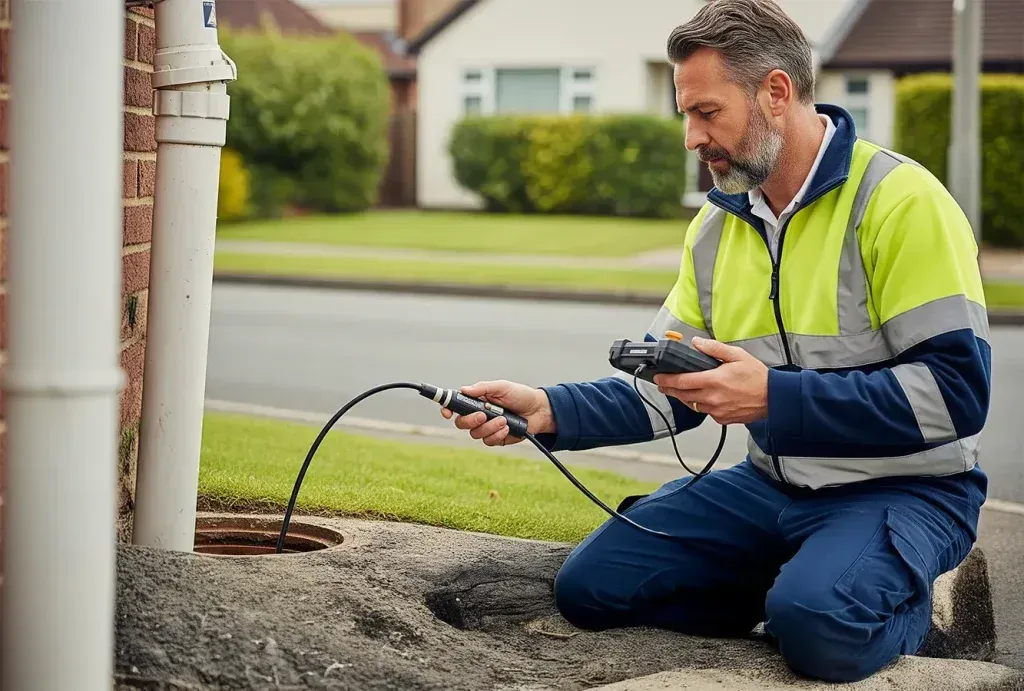
Annual root treatment with a foaming root-killing agent, applied through a cleanout, can slow intrusion significantly. But if roots have already colonized a substantial section of pipe, chemical treatment alone will not restore capacity. A camera inspection is the only way to know what you are actually dealing with before committing to a treatment plan. For homeowners dealing with persistent root problems, no-dig sewer repair methods can restore full pipe capacity without excavating landscaping or hardscape.
Practical Steps to Reduce Your Backup Risk This Spring
There is no single solution that eliminates sewer backup risk entirely, but a layered approach reduces it sharply. Here is what experienced plumbers recommend for central Ohio homeowners heading into the wet season:
- Schedule a sewer camera inspection. If your home is more than 30 years old and you have never had the lateral inspected, this spring is the time. A camera run will show root intrusion, pipe offset, cracks, and any bellying in the line.
- Install a backflow prevention valve if you do not already have one. This is especially critical for homes in lower-lying areas of Worthington near Olentangy floodplain zones.
- Clear basement floor drains. Ensure the trap is filled with water. A dry trap allows sewer gases and backflow to enter without resistance.
- Avoid flushing wipes, grease, and paper towels. These materials accumulate in partially-restricted lines and create complete blockages during high-volume events.
- Disconnect downspouts from the sanitary system if yours are still tied in. Many older Worthington homes had roof drainage connected to the sanitary lateral — a practice now prohibited but still present in older properties.
- Know where your cleanout is located. If a backup occurs, having accessible cleanout access allows a plumber to respond faster and limit damage.
When to Call a Plumber Versus Handle It Yourself
Some homeowners are comfortable applying root treatment chemicals or flushing enzyme cleaners through their cleanout as a maintenance measure. These are reasonable DIY steps if your line is in generally good condition. What is not a DIY situation: any active backup, a suspected break or offset in the lateral, or root intrusion that has been confirmed by camera. These require professional equipment and licensed work under Ohio plumbing code.
Worthington's older housing stock — much of it dating to the 1950s through 1970s — presents specific challenges that generic online advice does not account for. Clay tile pipe behaves differently than modern PVC under root pressure and ground movement. A plumber familiar with the infrastructure patterns in this part of Franklin County will diagnose and address problems far more accurately than one working from general assumptions.
The Broader Value of Proactive Maintenance
Sewer backups cause an average of $10,000 to $25,000 in structural and property damage when they reach finished basement spaces, according to insurance industry data. Standard homeowner's policies often exclude sewer backup unless a specific rider has been added. Prevention is not just about avoiding a mess — it is about protecting a significant financial asset.
Spring is the right time to act because you still have the opportunity to intervene before conditions peak. Scheduling a camera inspection in March or early April means you have time to address what is found before the heaviest rainfall arrives. Taking a reactive approach — waiting until water is already on the basement floor — limits your options and amplifies your costs.