Spring Repiping Planning for Worthington OH Homeowners
Worthington homeowners who have been putting off whole house repiping often find that spring is the season that finally makes the project feel manageable. After a long Ohio winter of reduced ground workability, fluctuating indoor temperatures, and the general reluctance to schedule major work during the holidays, the window between late March and early June offers something rare: mild weather, accessible plumbing access points, and contractors whose schedules have not yet filled with summer emergency calls. If your home has been showing signs of pressure loss, discolored water, or aging pipe material, this is the planning window you want to use strategically.
Why Spring Timing Works in Your Favor
The practical case for spring repiping starts with temperature. Pipe access in Worthington homes often requires work near exterior walls, crawl spaces, or partially exposed basement runs. When ground temperatures are still moderate and indoor humidity is manageable, plumbers can work efficiently through these areas without the complications that come with frozen ground in February or the heat-driven demand surge of July. Scheduling your project in April or May also means you are ahead of the summer rush, when HVAC and plumbing contractors both see their calendars compress quickly.
There is also a practical household argument. Spring repiping lets you plan the necessary water shutoff during a period when outdoor water use has not yet ramped up. You are not managing an irrigation system, a pool fill, or a full summer routine around a two-day shutoff window. Families find it easier to make temporary arrangements for water access when the routine is already lighter and the weather allows more flexibility in how you use the home during the work window.
What Whole House Repiping Actually Involves
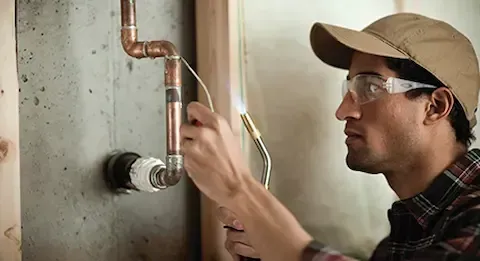
Homeowners sometimes delay repiping because the scope feels vague. Understanding what the work covers helps you plan accurately. A whole house repipe replaces the supply lines that carry pressurized water from your main shutoff to every fixture, appliance, and outlet in the home. This typically includes the runs feeding your kitchen, bathrooms, laundry, and any utility connections. It does not include drain or waste lines, which are a separate system.
In Worthington homes built before the mid-1980s, the original pipe material is often galvanized steel, which corrodes from the inside over time. If your home has galvanized lines, you may already be dealing with reduced flow, rust-tinted water, or pressure inconsistencies that get worse as the pipe interior narrows. For more background on what happens inside those aging lines, the post on removing rusted galvanized lines walks through the deterioration process in detail. Copper and PEX are the two primary replacement materials used in residential repiping today, each with advantages depending on your home's layout, budget, and local conditions.
Building a Realistic Project Timeline
Spring planning works best when you treat the timeline in three phases. The first phase is assessment. Before you can schedule anything, you need a plumber to walk through the home and evaluate your current pipe condition, material type, and access points. This is not a commitment to proceed. It is a diagnostic step that gives you real numbers to plan around. In Worthington, homes with finished basements or second-floor bathrooms will have different access requirements than ranch-style homes with open crawl spaces, and those differences affect both cost and duration.
The second phase is preparation. Once you have an estimate and a proposed scope, use the weeks before the scheduled start to handle logistics. This includes arranging temporary water access if the shutoff will extend beyond a single day, communicating with anyone in the household who has medical or routine needs tied to water availability, and clearing access to areas like under-sink cabinets, utility closets, and mechanical rooms. Some drywall or ceiling access may be required, and knowing that in advance helps you plan for the patching work that follows.
The third phase is the work itself and the close-out. Most whole house repipes in a standard Worthington single-family home are completed in one to three days of active work. After the new lines are in, the system is pressure-tested, inspected, and restored. Any drywall or finish work needed to close access points is typically handled by a separate contractor unless your plumber offers a full finish package.
Permits and Local Requirements
Repiping in Worthington requires a permit through the City of Worthington's Building Department. This is not a step to skip or defer. The permit process ensures your new installation is inspected and documented, which matters for your homeowner's insurance and for any future sale of the property. When you work with a licensed plumber for your repiping project, they handle the permit application as part of the job. Confirm this expectation before work begins so there are no gaps in documentation.
Worthington's older neighborhoods, particularly around the Historic District and the streets north of Dublin-Granville Road, often have homes where the original pipe runs are not intuitive from a modern layout perspective. Additions, renovations, and updated kitchens may have created hybrid plumbing paths that require more careful tracing during the assessment phase. An experienced local plumber will factor this into the evaluation rather than applying a generic estimate.
Preparing Your Home and Household
The logistics of living through a repipe are manageable with the right preparation. Stock several days of bottled water or arrange access to a relative's home for the shutoff window. Plan for at least one overnight where you may not have running water if the project spans two days. Talk to your plumber about whether partial water restoration is possible between work sessions, as some projects allow the crew to restore main pressure at the end of each day even while work continues.
If you have pets, elderly household members, or anyone with specific hydration or medical needs, map out those logistics before the start date rather than improvising during the job. Spring's mild temperatures make this easier than a summer repipe, where heat adds urgency to the water access question.
Making the Decision Before the Season Passes
The Worthington spring window is genuinely limited. By June, contractor schedules tighten and the season starts competing with outdoor project demand. If your home is showing signs that repiping is overdue, the most useful thing you can do right now is schedule the assessment. That single step turns an abstract concern into a concrete plan with real numbers, a real timeline, and a clear path to getting it done before summer complicates the calendar.