How to Find a Hidden Water Leak in Worthington OH Homes
To find a hidden water leak in your Worthington OH home, start by turning off all water-using appliances and checking your water meter. If the dial or digital display moves, water is escaping somewhere. Walk through your home listening for hissing or dripping sounds, inspect under sinks and around toilets, and check for warm patches on floors that might indicate a slab leak. These DIY checks narrow the search area. For a confirmed location, professional acoustic leak detection or thermal imaging pinpoints the exact spot without unnecessary digging or wall removal.
How Do I Check My Water Meter for a Hidden Leak?
Shut off every faucet, appliance, and irrigation valve in the house so zero water should be moving. Locate your meter — typically near the curb or sidewalk in front of your Worthington property — and watch the low-flow indicator, usually a small triangle or dial. If it spins within a few minutes, you have an active leak. Record the meter reading, wait one hour without using any water, then check again. Any increase confirms a leak somewhere in your supply system. This test costs nothing and takes under ten minutes, making it the logical first step before any investigation.
Where Should I Look First Inside the House?
After confirming a leak exists, move systematically through the most common failure points:
- Under kitchen and bathroom sinks — check supply lines, shut-off valves, and drain connections for moisture or mineral staining
- Toilet bases and tank connections — add a few drops of food coloring to the tank and wait ten minutes without flushing; color in the bowl signals a flapper leak
- Water heater area — look for puddles, rust streaks, or corrosion around the pressure relief valve and inlet fittings
- Washing machine supply hoses — rubber hoses degrade and are a leading cause of concealed moisture behind appliances
- Basement walls and floor — white efflorescence (chalky mineral deposits) or damp patches indicate water moving through concrete
Worthington homes built before 1990 often have galvanized steel supply lines that corrode from the inside, producing intermittent pinhole leaks that soak insulation for months before visible damage appears.
How Do I Detect a Leak Behind Walls or Under the Floor?
Press the flat of your hand against drywall in bathrooms and laundry areas. Soft, spongy, or noticeably cool sections suggest trapped moisture. Discoloration, bubbling paint, or a slight musty odor confirms water activity behind the surface. On hardwood or laminate floors, look for boards that cup, buckle, or feel springy underfoot — signs that moisture is migrating from below.
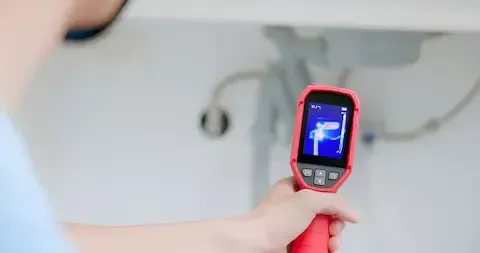
For water leak sources buried deeper in walls or beneath concrete slabs, DIY methods reach their limit. Thermal imaging cameras detect temperature differentials where cold water cools surrounding material. Acoustic listening devices amplify the sound of pressurized water escaping a pipe. Both tools require training to interpret accurately, which is why professional detection is far more reliable than exploratory demolition for leaks you cannot see or hear clearly on your own.
What Are the Signs of a Slab Leak Specifically?
Slab leaks occur when supply or drain lines beneath your concrete foundation fail. Because Worthington sits in central Ohio with clay-heavy soil that expands and contracts seasonally, underground pipe movement is common in older neighborhoods. Watch for:
- Warm or hot spots on the floor surface, even on cold days
- The sound of running water when everything is turned off
- Unusually high water bills with no change in household usage
- Cracks developing in baseboards or floor tiles
- A drop in water pressure at fixtures throughout the home
If these symptoms sound familiar, reviewing information on spotting slab leak symptoms can help you distinguish a slab leak from a standard plumbing leak before calling for service.
When Should I Call a Professional Leak Detection Technician?
Call a professional when your meter confirms a leak but you cannot locate it visually, when you suspect a slab leak based on the symptoms above, or when moisture damage is spreading faster than you can identify the source. Worthington plumbers equipped with acoustic amplifiers and thermal cameras can locate a hidden leak to within inches without cutting open walls or core-drilling concrete until the exact repair point is confirmed. This precision protects your flooring, tile work, and structural materials from unnecessary damage.
Early detection also matters for insurance claims. Many homeowners policies in Ohio require evidence that a leak was addressed promptly to cover resulting water damage. A professional report documenting the leak location and cause supports your claim if damage has already occurred in your home.
How Can I Prevent Hidden Leaks in the Future?
Annual plumbing inspections are the single most effective prevention measure for Worthington homeowners. During an inspection, a technician checks supply line condition, valve operation, water heater fittings, and fixture connections — the same spots where concealed leaks originate. You can also install a whole-house leak detection device on your main supply line that shuts off water automatically when abnormal flow is detected, preventing minor leaks from becoming major damage events overnight or while you are away.
Monitoring your water bill month over month is a free passive detection method. A sudden unexplained increase of 10 percent or more warrants a meter check immediately. Given the freeze-thaw cycles that stress pipes each winter across the Columbus metro area, spring is a practical time to schedule a routine inspection before small issues become expensive repairs.